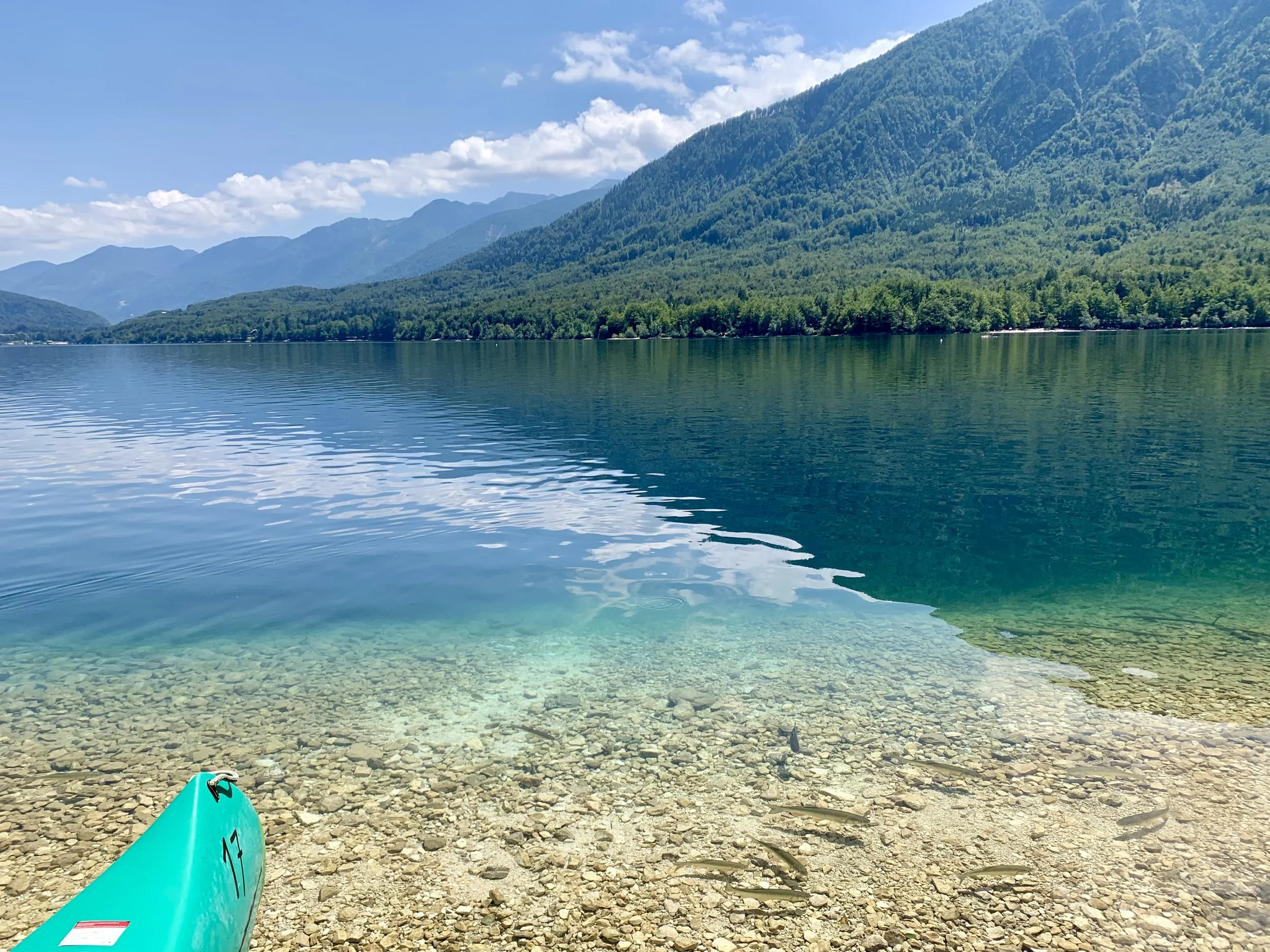
Rowing the canoe on Lake Bohinj, Slovenia.
Have you ever rowed a boat together with someone else? What about with two other people? Three? Five? Ten?
This summer, while visiting my home country of Slovenia, we paddled a canoe with my family of four on the Bohinj lake. And it was so HARD to do it straight, even though we’ve done it a few times before. We got to our destination, but it was a challenge to balance the boat’s right and left sides. It reminded me of teamwork and this metaphor I once got from my old ustwo colleague.
Imagine that oars on one side of the boat represent the actual work you're supposed to deliver as a team. And the other side represents the team relationship and its dynamics. You need a balance of both to move forward smoothly.
Focus too much on one side, and you’re suddenly on a merry-go-round. It’s commonplace that teams forget to row with the relationship oar and wonder why getting the work done is so difficult.
In teams I meet, I often observe this imbalance between task-oriented work and the crucial aspect of building and maintaining relationships.
The symptoms of imbalance
Lack of trust: Team members hesitate to share their opinions or admit mistakes due to fear of judgment.
Communication disturbances: Information isn't shared effectively, leading to confusion, assumptions and misunderstandings.
Ineffective conflict resolution: Disagreements and tension are either swept under the rug or escalate into full-blown conflicts, ending in blame and ruptures in the relationship bond.
Reduced Innovation: A reluctance to share creative ideas stifles innovation, limiting the team's potential for growth.
Isolation: Team members focus only on their own tasks, working in silos and limiting cross-functional collaboration.
Now add a remote and asynchronous team environment, and you’ve got a recipe for disaster.
The culprit
The underlying pattern, I believe, is busyness. Teams are too busy to take a break, too busy to take 10 minutes in the team meeting to talk about how everyone is feeling, too busy for a team building hour, too busy to take time to get inspired…well, you get the point.
In busy times, teams are encouraged to move fast to get their work done, and focusing on creating a good team environment is often seen as “a luxury our team just can’t afford right now”. The problem is that most teams are constantly busy and moving fast, so there is never a good time. So, my observation is that this work is just not seen as important enough and often, the impact of it is underestimated.
Now what?
As you can see, balancing the task-oriented side with the relationship-oriented side is not just nice to have. The best-performing teams balance the two: mastering the art of rowing through practice and coordination and integrating relationship-building into the team's routine. This demands effort and commitment - but it’s worth it. Investing in it will influence your team's resilience, cohesion, and overall success.
So, as you steer your team's boat, consider not just the destination but the journey itself. It takes deliberate effort to get out of “busy”, but you can start fostering a balanced approach.
A few ideas
Mini-inserts:
5-minute energy-level check-in at the meeting start: “On a scale of 1-10, what is your energy level today and what makes it so?”
15-minute standup: a short update twice a week: “What are you working on? What blockers do you have? What help do you need? What excites you today?
Short, celebratory end-of-day message: What are you proud of / grateful for / celebrate today?
Maxi efforts:
Curiosity challenge: Have lunch or dinner together, asking: What is one thing about your teammates you are curious about?
Hobby time: Bring your team to a hobby activity that you love to do, tell them all about it and reflect together on it: What does this new perspective offer in relation to your work as a team?
Role reversal: Spend a full day creating visions, exploring, crafting strategy and having fun by switching roles and making decisions from new perspectives
And, as a wise human once said:
“Slow is smooth. And smooth is fast.”
If you want to learn the skills to slow down and then turn slow into smooth and fast, join us in Creative Catalyst, where we will be honing relational skills for nurturing connected and successful teams.
And - next time I’m on the lake with my family, I will make sure to take my own advice, so we know how to deal with the rowing when someone is rowing too slow, someone else too fast, someone is clashing their paddle into others, someone is splashing water, someone is hungry, and someone’s arm hurts.